Why Coins — Not Bars?
Understanding the structural difference between tracking metal prices and building layered long-term value.
Gold and silver bars and collectible coins both contain precious metal — but they are not the same type of asset.
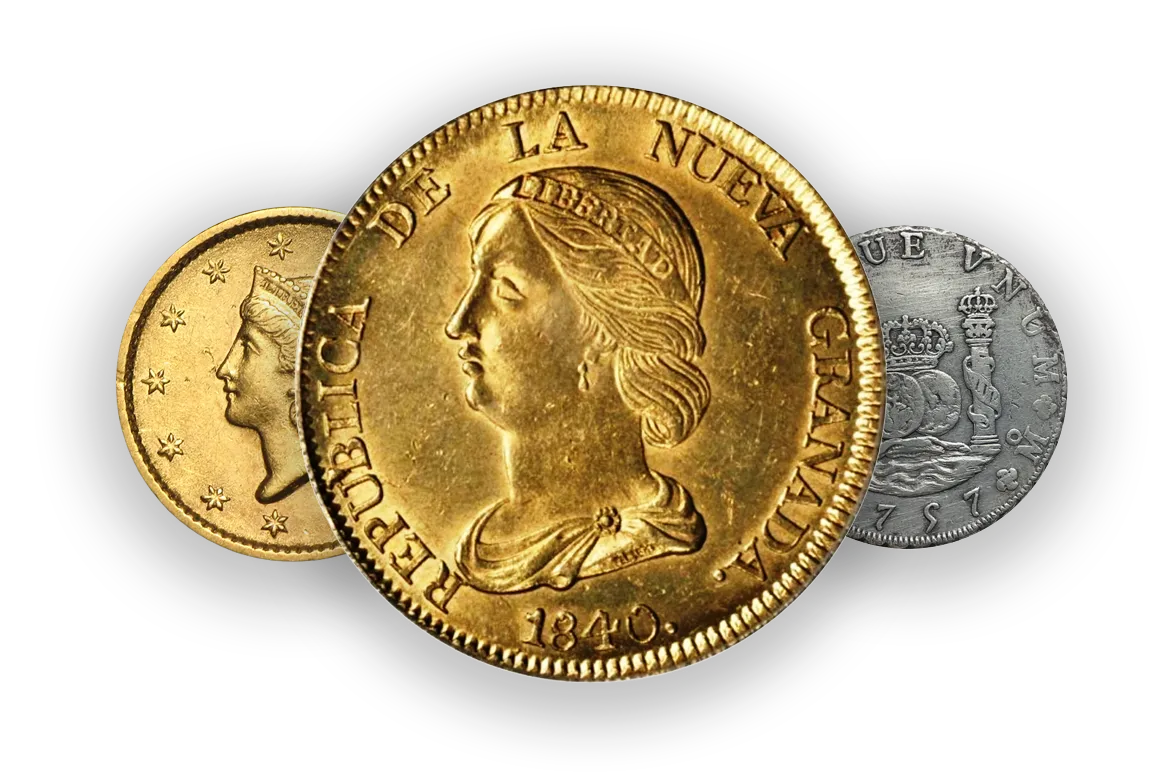
What Bars Are Designed For
They are straightforward instruments designed to track commodity pricing — nothing more, nothing less.
For investors seeking pure metal exposure, that simplicity can be appealing.
But simplicity also means limitation.
What Coins Add
Collectible coins introduce a second layer of value.
Like bars, they contain precious metal. That intrinsic value fluctuates with gold or silver prices.
But certain coins also carry numismatic characteristics — influenced by history, scarcity, condition, and collector demand.
When both layers exist, the structure changes.
Instead of relying solely on metal price movement, carefully selected coins may benefit from independent collector demand over time.
Not every coin has meaningful numismatic value. And not every coin is suitable for long-term accumulation.
Selection matters
A Different Value Structure

Bars reflect metal pricing.
- Metal value
- Scarcity
- Historical relevance
- Condition
- Collector demand
That broader demand base creates a different dynamic than pure bullion.
It does not eliminate risk.
It does not guarantee appreciation.
But it changes the structure of the asset.
Why NumisWealth Focuses on Coins
NumisWealth is built around disciplined accumulation of tangible assets with layered value.
We do not seek speculation.
We do not chase volatility.
We focus on collectible coins that balance intrinsic metal content with realistic numismatic characteristics — always with a long-term perspective.